Sunday, June 30, 2024

Western Meadowlark


A couple of months ago a Western Meadowlark was reported just south of where we live in Lambton County. We had observed this bird in our travels out west but this would be a new bird for our Lambton list so I jumped at the chance to observe it. The bird was perched on a hydro wire actively singing upon my arrival.


Some cool facts about the Western Meadowlark from Cornell All About Birds

Although the Western Meadowlark looks nearly identical to the Eastern Meadowlark, the two species hybridize only very rarely. Mixed pairs usually occur only at the edge of the range where few mates are available. Captive breeding experiments found that hybrid meadowlarks were fertile, but produced few eggs that hatched.

The explorer Meriwether Lewis was the first to point out the subtle differences between the birds that would eventually be known as the Eastern and Western Meadowlarks, noting in June 1805 that the tail and bill shapes as well as the song of the Western Meadowlark differed from what was then known as the “oldfield lark” in the Eastern United States.

Like other members of the blackbird, or icterid, family, meadowlarks use a feeding behavior called “gaping,” which relies on the unusually strong muscles that open their bill. They insert their bill into the soil, bark or other substrate, then force it open to create a hole. This gives meadowlarks access to insects and other food items that most birds can’t reach.

The Western Meadowlark is the state bird of six states: Kansas, Montana, Nebraska, North Dakota, Oregon, and Wyoming

Friday, June 28, 2024

Upland Sandpiper

An area I love to bird in the spring, usually around April 18 or 19th, is Marthaville Road south of Aberfeldy in Lambton County. On a nice morning it's great to first cruise along slowly in the truck and since there is very little traffic, parking roadside for photography is pretty easy. Then I enjoy getting out and just walking along roadside to see what pops out. This year was no exception as there were lots of signing birds.


                                                            Upland Sandpiper


                                                                    Bobolink


                                                         Eastern Meadowlark


                                                              Brown-headed Cowbird


                                                                   Savannah Sparrow

Wednesday, June 26, 2024

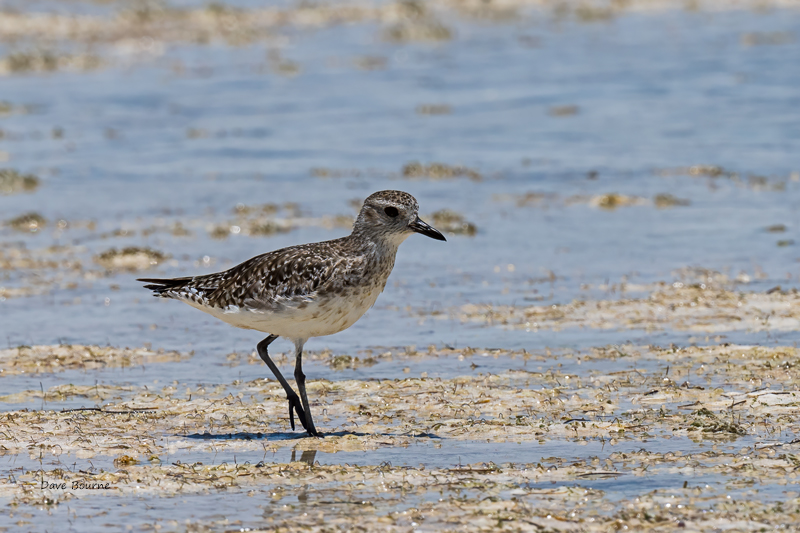
Cuban Shorebirds

Low tide along the Cayo Coco coast provides the opportunity to observe a variety of shorebirds, most in their winter plumages.


Monday, June 24, 2024

White-crowned Pigeon

The White-crowned Pigeon is a very large pigeon that is a common to locally abundant breeding resident and passage migrant throughout the Cuban archipelago.


Saturday, June 22, 2024

American Flamingo

American Flamingoes can also be observed in large numbers on Cayo Coco.


Usually found in the wetland areas where they feed on algae and small invertebrates by pumping water through their inverted bills.


A pair of flamingoes lay one egg in a mud mound.


Thursday, June 20, 2024

American Kestrel

Another very common bird to observe and photograph around the resorts on Cayo Coco is the American Kestrel. Not only are North American Kestrels around but Cuba has it's own subspecies. Sometimes I could observe up to six Kestrels while standing in one spot, all actively hunting.


Tuesday, June 18, 2024

Neotropic Cormorant


The Neotropic Cormorant occurs in sheltered waters of southern U.S. states, the Caribbean, and Latin America. It is smaller and longer-tailed than other cormorants, but otherwise looks very similar to the Double-crested Cormorant, and the two species often flock together.


Unlike its larger cousin, it sometimes plunge-dives for fish from a few feet above the water, almost like a booby, though it dives mostly as it paddles along the water’s surface, catching fish as it darts through the water. Cornell All About Birds

Sunday, June 16, 2024

Cuban Black Hawk


The Cuban Black Hawk is endemic to the island of Cuba. It is mostly found along the coastlines near swamps and mangroves, in palm savannah and along roadsides. We have had the opportunity to observe many Cuban Black Hawk however none as photogenic as this one.


The Cuban Black Hawk is a large, broad-winged hawk of forests that can usually also be found hanging around resorts. The body of adult is entirely dark brown to black.

Differs from perched vultures in having feathered head plus yellow bill and legs.


The Cuban Black Hawk feeds on a number of different species. A high portion of its diet includes crabs, but it also feeds on centipedes, lizards, birds, and rats.


It is best distinguished in flight by bold white patches near end of wings and by its large size. In flight, the Cuban Black Hawk has broad wings and a shorter tail.

Friday, June 14, 2024

Roseate Spoonbill


The Roseate Spoonbill has bright pink feathers, red eye staring out from a partly bald head, and giant spoon-shaped bill. Groups sweep their spoonbills through shallow fresh or salt waters snapping up crustaceans and fish. They fly with necks outstretched, to and from foraging and nesting areas along the coastal southeastern U.S., and south to South America. These social birds nest and roost in trees and shrubs with other large wading birds.


The Roseate Spoonbill is 1 of 6 species of spoonbills in the world and the only one found in the Americas. The other 5 spoonbills (Eurasian, Royal, African, Black-faced, and Yellow-billed) occur in Asia, Africa, Europe, and Australia. We observe Roseate Spoonbills on our trips to Florida quite frequently and have photographed the African Spoonbill while on safari in Kenya.


Roseate Spoonbill chicks don't have a spoon-shaped bill immediately after hatching. When they are 9 days old the bill starts to flatten, by 16 days it starts to look a bit more spoonlike, and by 39 days it is nearly full size.


Roseate Spoonbills get their pink coloration from the foods they eat. Crustaceans and other aquatic invertebrates contain pigments called carotenoids that help turn their feathers pink. Cornell All About Birds


There is also a large Osprey nest out at Las Coloradas. When the Osprey wasn't busy defending the nest from Turkey Vultures it would perch up beside the Spoonbill.

The oldest recorded Roseate Spoonbill was at least 15 years, 10 months old when it was recaptured and rereleased during a scientific study in Florida in 2006.

Wednesday, June 12, 2024

White Ibis


So, in the afternoon, if there is no wind for the Hobiecats, I like to hike along the Cayo Coco beach about 3km to a deserted area I love to bird at low tide called Las Coloracas. On this particular day I observed a Spoonbill standing on a log amongst the mangroves. I immediately started shooting. The bird eventually lifted and flew behind some mangroves. I was intent on getting some flight shots of a Spoonbill and was intently shooting as it came out the other side from behind the mangroves. As I was glued to the viewfinder it took me a minute to realize that I was now shooting a White Ibis. The Spoonbill had perched behind the mangrove but flushed an Ibis. All totalled there were 6 White Ibis amongst the mangroves that afternoon.


We have been able to observe 6 type of Ibis, White, White-faced, Glossy, Sacred, Scarlet, and Hadada. However there are 29 species of Ibis!

White Ibises gather in groups in shallow wetlands and estuaries in the southeastern United States. At each step, their bright red legs move through the water and their curved red bill probes the muddy surface below. As adults, these striking wading birds are all white save for their black wingtips. White Ibises nest in colonies in trees and shrubs along the water's edge, changing locations nearly every year.


Male White Ibises are super protective. They guard the nest and their female to prevent other ibises from stealing sticks from the nest and from advances of other males during nest building and egg laying.

When baby White Ibises hatch their bills are straight. Their bills don't start to curve downward until they are 14 days old.

Female White Ibises are smaller than males, weighing nearly 10 ounces less on average with a smaller bill and shorter wings.

The oldest recorded White Ibis was at least 16 years, 4 months old when it was found in Florida in 1972. It was banded in Alabama in 1956. Cornell All About Birds